top of page
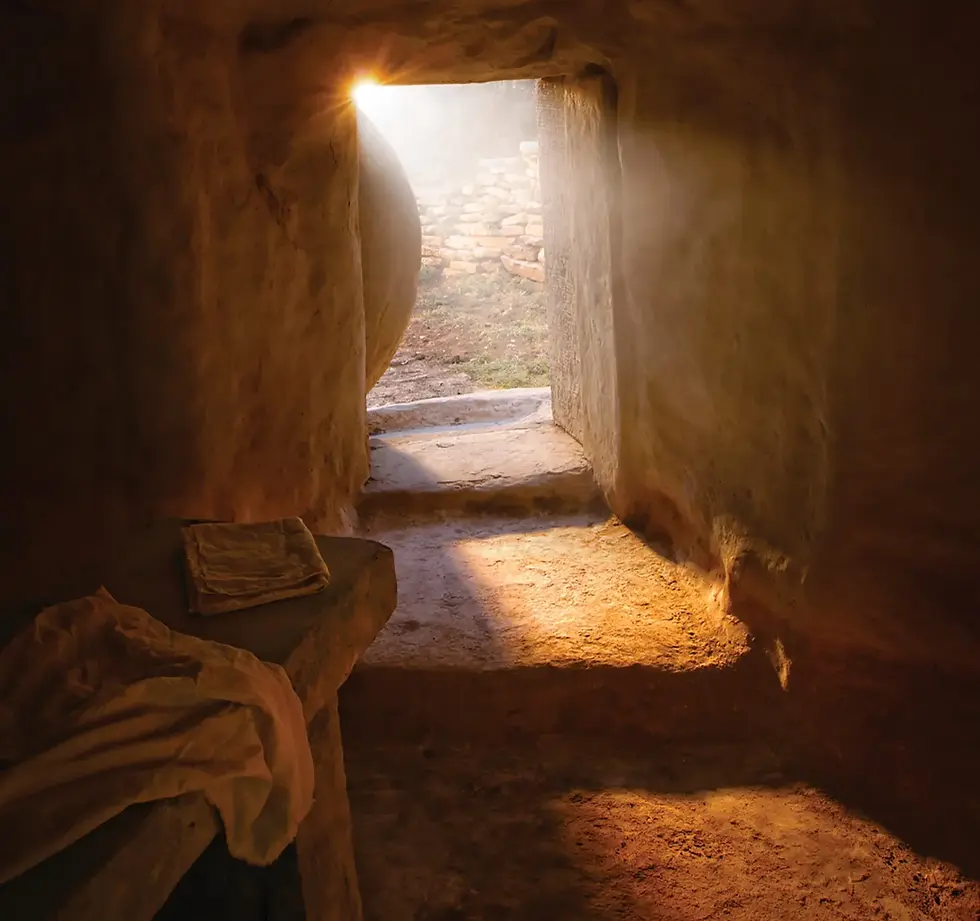
jesus_christ_empty_tomb_goshen_utah.webp

 Daily Reflection 

White Lillies
Memorial of Saints Timothy and Titus, Bishops
2 Timothy 1:1-8 or Titus 1:1-5
Psalm 96:1-2a, 2b-3, 7-8a, 10
Mark 3:22-30

“Why are we praying for people we don’t even know?” my grandchildren asked, because as we drove past a hospital, I asked them to join me in praying a Hail Mary for the people inside. A great conversation ensued about the family of God, that we are all his children, brothers, and sisters, and that some people have no one to pray for them. 

Why do I bring this up? Well, today is the memorial of Sts. Timothy and Titus, and it is an important day in the calendar of my family’s history; my Father’s given name was Timothy, and both of his parents died on this day, before I was born. My grandmother was a holy woman by all accounts; I wish I had the chance to meet her, and yet, somehow, I am certain that her faith and her prayers have influenced, protected, and covered me all of my life.

In the first reading, we hear in the letter to Timothy, love and encouragement from Paul, who is writing, and advising the young disciple, from imprisonment. In it, he reminds Timothy of ‘the sincere faith that first lived in your grandmother, Lois, and in your mother, Eunice, and that I am confident lives also in you.’ This reading always makes me wonder about the faith and prayers of my own grandmother. 

As parents, and especially as grandparents, we can never underestimate the influence we have over our family members. Our children are drawn closer to us and to Jesus, as we model prayer and unconditional love. Our little grandchildren are more likely to sit and listen to us, accepting our prayer time as precious quiet time with us. We have more time to teach them and encourage them in the faith, to stir up the gift of God, unashamedly proclaiming him, as we share our love of God with them, pray with them, using ordinary everyday moments, like driving  past a hospital, as opportunities to model prayer and love of neighbor. And as they grow, our presence, even long distance, is important; we can send messages and videos that remind them of our daily prayers, as they face the temptations and conflicting messages of the secular world. 

In the gospel, Jesus takes the scribes to task for their ridiculous accusation that he was driving out demons by the power of Satan, and he reminds them that a house divided cannot stand. He goes on to establish that only an unprotected house can be breached. 

Today, let us remember that we, like Timothy, have been given a spirit of power to protect the houses of our families with faith, prayer, and with the example of our lives. As Paul reassured Timothy, our sincere faith will live on in our children and our grandchildren.

January 26

White Lillies
“Then David, girt with a linen apron, came dancing before the Lord with abandon.” (2 Samuel 6:14)

The word that caught my attention in the first reading was “abandon”.  What set King David apart from other faithful kings? His complete trust and dependence on God. 

The wooden box, the sign of the covenant, accompanied the Israelites on their journey.  When the ark was carried into Jerusalem, the celebration spilled out into the streets. King David danced before the Lord with abandon, enraptured by the presence of God. The Beloved dwelt among them. They were home.  Each household shared the sacrifice and the joy.

A strong but fatally flawed human character, David’s conquest, lust and heartbreak did not define him. His joy ran deeper. In trusting God, he was free. This was David’s greatness. From his line the Messiah would come. Like the tent in which the ark was placed, the future king would take humble form.

As we focus on the joy and the admiration David showed God, I thought about how I express my love to God.  Do I share my love of Christ with reckless abandon? I think our Corpus Christi Procession presents an opportunity like David had, as we carry Christ through the streets of our neighborhood. Does our JOY pour forth from us? We sing with conviction, maybe this year we should dance too. 😊

We find in the Gospel that Jesus tells the people He is with they are His mother and His brother (or sister), for they are striving to do the will of God. Is He denying His relationship with His kin? As odd as Jesus’ response seems to be, He is not trying to belittle Mary or His brothers (cousins, relatives). The answer lies in Jesus’ words, “whoever does the will of God is my brother and sister and mother.” 

There is something even more than kinship with Jesus.  We become family with Jesus by seeking and doing the will of God. Seeking and doing God’s will is what Jesus’ life is all about.  I establish a “family” relationship with Jesus by imitating Him in His desire to do God’s will.  I become “family” with Jesus – by actually doing God’s will. Mary gives us the greatest example of total surrender to God’s will. She is both family and kinship to our beloved Savior.

Our readings today invite us to trust God with reckless abandon as King David did and to surrender to God’s perfect will like Jesus. In doing so the Holy Spirit will allow us to lose any inhibitions we have as we express with abandon our love for the Lord.

January 27

White Lillies
Memorial of St. Thomas Aquinas, Priest and Doctor of the Church

Readings:  https://bible.usccb.org/bible/readings/012826.cfm 
 
Today, we celebrate the memorial of Thomas Aquinas, a Dominican priest and one of the greatest Doctors of the Church. His most influential work was his Summa Theologiae, which mostly dealt with the moral life.

St. Thomas Aquinas was a Dominican friar in the 13th century. He taught that faith and reason are compatible, as both originate from God, the source of all truth. Reason can demonstrate "preambles of faith," such as the existence of God, but truths like the Trinity or Incarnation require divine revelation. He argued that grace does not destroy nature but perfects it, allowing human intellect to reach higher truths. 

St. Thomas Aquinas developed a Christian morality, theology and ethics, that addressed the relationships between God and Creation, human action and happiness, virtue and law, and defined the Natural Law.

•	God and Creation: God is simple, perfect, and infinite act (pure actuality). All creatures depend on Him and possess inherent goodness as they are created in His image.
•	Human Action and Happiness: Human beings seek happiness, which ultimately consists in the "beatific vision"—knowing and loving God directly in the afterlife.
•	Virtue and Law: Moral life involves Theological (faith, hope, charity) and Cardinal (prudence, justice, temperance, fortitude) virtues.  These virtues form the basis of our participation in the Natural Law.
•	Natural Law: This is the participation of the rational creature in the eternal law of God. It is an innate capacity to discern good (to be done) from evil (to be avoided). 

St. Thomas Aquinas’ great faith led to his teaching on Christ and the Sacraments.  Aquinas emphasized the Incarnation, where the Son of God became man to communicate divinity to humanity. Christ serves as the mediator (the way) to God. The Sacraments, particularly the Eucharist, are central, functioning as "instruments" through which Christ dispenses grace to heal and sanctify humanity. 

Perhaps of greatest value, we learn from St. Thomas Aquinas that our mind can and should be used to lead us to a deeper understanding and love of God.  In today’s world of many distractions, temptations, and false teachings, we can train our minds to stay focused on God’s love, learn from God’s Word, and be filled with His grace in the sacraments as the true path to our eternal happiness.

Today’s Question for Prayer and Reflection  

What will you pursue to satisfy your restless heart?

January 28

White Lillies
2 Samuel 7:18-29
Psalm 132
Mark 4:21-25

Our gospel today comes from the series of parables in Mark’s gospel wherein Jesus is teaching us to be more aware of our actions to better ensure we are pursuing those things that carry forth his mission.  

Today, Jesus encourages us to be aware that everything we do, say or think are always known by God.  We can try our best to deceive those around us, but God always sees our hearts and minds.  To that end, flipping it around, God sees and knows our compassion even though we may not express it.  God knows when we pray for the souls in purgatory.  God knows when we truly are trying to do our best to make life better for others.

By our baptism we are called to share with others the great message of love found in the mission of Christ.  These days it is even more important to act in ways that attract others to Christ’s mission.  There is plenty of opportunity to express our beliefs in words on social media but frankly, it is usually ineffective.

When we look at others as children of God, we will be ready to make them the version of themselves that God intended for them.  We do not judge the other person in total, that is God’s job.  However, we very much need to judge actions.  Telling someone to do whatever makes them happy is wrong - some actions are quite immoral.  Showing others the joy found in leading a life filled with the actions Christ calls us to do will win over those who need another direction.
 
It is a beautiful day.  Go smile at God today.

January 29

White Lillies
Like the past two days, Jesus teaches using a parable in today’s Gospel.  And again today, the Word of God is described as a “seed.”  Why a seed?

In Wednesday’s parable, Jesus spoke about the sowing of the seed and how it is rejected or welcomed by someone. This parable teaches us that God generously sows everywhere, almost indifferent to how people will welcome his Word. The main contrast is between those who do not bear lasting fruit in the Kingdom and those who do. The parable invites us to reflect on how we respond to God’s Word: indifferently, superficially, half-heartedly, or as we should. 

The second parable, which we read today, focuses not on the sowing of the seed and how it is rejected or welcomed, but on its mysterious growth. Just as a farmer is not the primary cause of the growth of the seed, we are not the primary cause of the growth of the Kingdom of God. We are only secondary and collaborating causes. The seed needs the heat of the sun, time deep in the earth, nutrients, and water. A disciple of Jesus, like the farmer, can facilitate these elements of growth, but always occupies a subordinate role. The entire process of a seed becoming a living plant remains mysterious and beyond our understanding. In the same way, the growth of the Kingdom of God in the world is primarily and mysteriously caused by God and only secondarily caused by our collaboration.

The third parable, also from today’s Gospel, focuses not on the sowing of the seed or how it mysteriously grows, but on the result of the seed. The Kingdom is compared to a mustard seed, one of the smallest seeds. The Kingdom of God, Jesus predicts, will be small in its beginning but grow, like a mustard seed, into a very large and invasive plant. If we look at history, we see how this prophecy of Jesus has been fulfilled. The Kingdom of God was so small in the beginning – just twelve apostles, several dozen disciples, and a group of women who provided for Jesus and his disciples. Over two thousand years later, the Kingdom has grown to international dimensions. The birds of the sky that dwell in the branches of the mustard plant are an image of the Gentile nations dwelling in the Church, which is the fruit of the Kingdom of God on earth.

The journey of the seed, as presented in these parables, is the same journey of our personal conversion to the Heart of Christ.  We receive God’s Word as the seed of eternal life.  We are free to accept or reject it.  Our faith in the Kingdom of God then grows based on our interior condition, the help of others, and the mysterious power of God through the Church and His Sacraments.  Ultimately, we begin to bear fruit as part of Mother Church, collaborating with her to spread the love of God to others.

Today’s Question for Prayer and Reflection
How is the Kingdom of God growing in my life?


Source for today’s reflection: https://epriest.com/reflections/view/3326

January 30

White Lillies
Today is Saturday, January 31st. It is the Saturday of the Third Week in Ordinary Time. Our Gospel reading is one we all are familiar with. It is the story of Jesus calming the storm on the Sea of Galilee. Yet, in all this passage has to offer, it was three simple words that spoke to me as I sat with Mark’s passage – THEY WOKE HIM!

In the Gospel, the disciples are crossing to the other side of the sea and Jesus is with them asleep, on a cushion, in the stern. The winds of a squall come up suddenly, and likely unexpectantly, as there was no maritime equipment at that time. The waves are breaking over the side of the boat placing it at risk of capsizing. Anxious and unsure – THEY WOKE HIM!

I wonder what would have happened if the disciples did not wake Jesus. What would the result have been if they tried to navigate the storm on their own? Would they have all perished? 

One thing for sure is the miracle never would have happened if they had not awakened Jesus. The command “Quiet! Be Still!” would never have been given. The wind would not have ceased. There never would have been great calm. The disciples may have remained terrified. They may not have increased in faith.

Why did those three words resonate with me? I look back at the times in my life when a storm rose in my life. Often, I was blind to the presence of Jesus in my “boat”. There were times when I recognized him in my “stern”, but was too pride-filled to wake Him, trusting I could get through it on my own. Maybe, deep down, I felt unworthy of disturbing the “master”. 

Admittedly, there were times when I called on Christ and the storm did not miraculously cease, but I was comforted by the presence of Jesus. There were times when Jesus and I simply got to “the other side” of grief, illness, mourning, estrangement or my own sinfulness. There were times the command “Quiet! Be Still!” was meant for me, not the storm. I needed to obey, and let Jesus captain my ship. When I did, I was less terrified and I grew in faith.

Christ with me – that was the only miracle I really needed.

What storms may be happening in your life? Could Jesus being saying to you today – Wake Me!

January 31

© Copyright 2026 St. Elizabeth Seton Catholic Church. All rights reserved.
 

bottom of page